
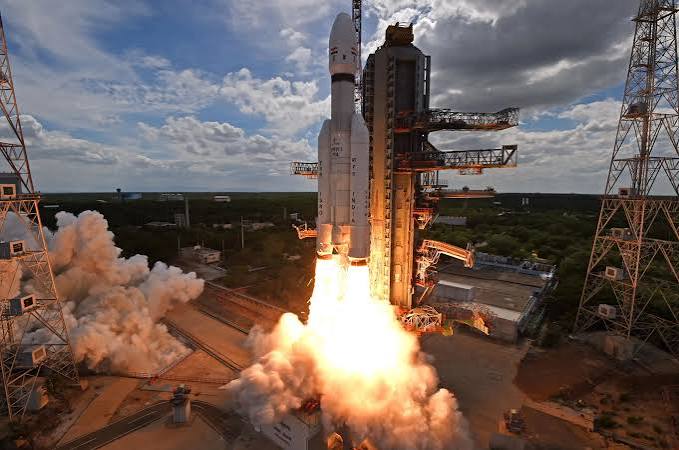
According to a recent study, India's rocket launch costs are far greater than those of the US, underscoring the significance of scale and technological expertise as the nation looks to grow its space sector.
According to a study published in Economics Letters, the average predicted cost of launching a kilogram of cargo into low Earth orbit in 2025 was more than $13,000 in India and $3,225 in the US.
In order to estimate launch costs and the correlation between experience and costs across nations, Alessio Terzi of the University of Cambridge and Francesco Nicoli of Politecnico di Torino examined a dataset of over 6,740 rocket launches between 1960 and 2025.The India-specific results were initially released by Mint on Friday.The results coincide with India's efforts to broaden its space sector beyond government-run initiatives and boost the participation of private businesses in satellite production, launch services, and other space-related endeavors.
According to the report, major spacefaring nations have very different launch costs, with India at the top and the United States at the bottom. It stated that Europe, Russia, China, and Japan were situated in between the two.The economists discovered that since 2010, only the US and Europe have demonstrated statistically significant "experience curves" in space launches, which indicate that costs have decreased as total launch experience has grown.
According to the survey, the United States has seen a quicker improvement.
The results highlight the need of boosting launch frequency and developing technological skills as India expands its commercial space industry.
In an effort to encourage indigenous companies to construct launch vehicles and compete for a larger piece of the global space market, India has opened its space sector to private corporations in recent years.
However, it is not appropriate to interpret the study's cost estimates as the cost of a single rocket launch. These are estimates of the average cost per kilogram of launching payloads into low-Earth orbit at the national level.
According to the researchers, as space access becomes more crucial for communications, navigation, surveillance, and other vital uses, the growing disparities in launch prices may potentially have strategic ramifications.
According to the estimate, the United States sent more than 80% of the world's payload into orbit in 2025, highlighting its size advantage in the launch business.Therefore, India's job is not just to construct launch vehicles but also to develop the scale and knowledge that would eventually assist lower launch costs.
According to the study's conclusions, reducing the cost differential with the US may play a significant role in India's attempts to increase its share of the global space economy.
The US cost advantage has strategic ramifications
According to the report, as nations depend more and more on space-based infrastructure for communications, navigation, surveillance, and other vital applications, the cost disparity may potentially have geopolitical ramifications.
Widening cost disparities, according to the researchers, could "reinforce strategic dependencies," especially if nations with higher launch costs start depending more on less expensive suppliers for space access.


