
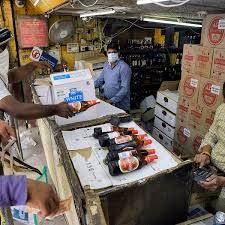
A senior ICMR official stated that a national alcohol strategy with evidence-based measures is urgently needed because India's per capita alcohol use has been gradually increasing over the past ten years.
The co-occurrence of alcohol and tobacco use among Indians, which presents significant public health issues, also need attention.
"Public health interventions addressing alcohol cannot be siloed from those addressing tobacco; integrated NCD risk factor surveillance and joint prevention messaging are essential," stated Dr. Shalini Singh, Director of the Indian Council of Medical Research-National Institute of Cancer Prevention and Research, Noida (ICMR-NICPR), a national cancer prevention institute.
It is particularly risky when alcohol and tobacco use coexist, as this is a well-established epidemiological pattern. According to her, the combination multiplicatively raises the risk of liver illness, esophageal cancer, and head and neck cancers.
Dr. Singh pointed out that India currently lacks a comprehensive national alcohol policy akin to the Cigarets and Other Tobacco Products Act, 2003 (COTPA) for tobacco. He stated that minimum unit pricing, outlet density restrictions, and advertising bans—particularly those pertaining to surrogate advertising—are necessary.
"The evidence base is unambiguous that alcohol and tobacco use are among the leading modifiable risk factors for India's growing NCD burden, including cancer and cardiovascular diseases," she stated.
Dr. Singh highlighted the results of the National Family Health Survey (NFHS-6) and stated, "The NFHS-6 data strengthen the case for a National Alcohol Control Policy, minimum unit pricing, restrictions on alcohol advertising, both direct and surrogate, over different media platforms, and standardized labeling with health warnings."
According to the most recent NFHS-6 statistics, alcohol use in India has increased among males but has not decreased among women.
The top scientist stated, "The rise in alcohol consumption among men is consistent with trends observed in many emerging economies or low- and middle-income countries across the globe, where rising disposable incomes, changing social norms, aggressive marketing by the alcohol industry, and inadequate regulatory enforcement are collectively driving consumption upward."
According to her, the reason why women in some states continue to consume alcohol is due in large part to context-specific social norms where women's alcohol consumption is less stigmatized, as well as problems with locally brewed alcohol (country liquor), which carries additional risks from adulterants and unregulated production.
"This cannot be written off as a minor issue," she continued. Compared to the national average, women's alcohol consumption has grown in eight states.
The high prevalence of alcohol consumption in several states relative to urban areas—a growing trend shown by NFHS-6 data—is especially concerning.
"The rural data from NFHS-6 make a compelling case for embedding cessation support into Ayushman Bharat–Health and Wellness Centers (AB-HWCs) and incorporating tobacco and alcohol use screening and brief counseling into the work of frontline health workers," she continued.
She added that the tobacco and alcohol consumption gradient between rural and urban areas is an example of the structural determinants of health."Sustained anti-tobacco and anti-alcohol media campaigns should be adapted for rural audiences, regional languages, and specific demographic groups, including women and youth, and must be budgeted and executed annually, not episodically," she said.


