
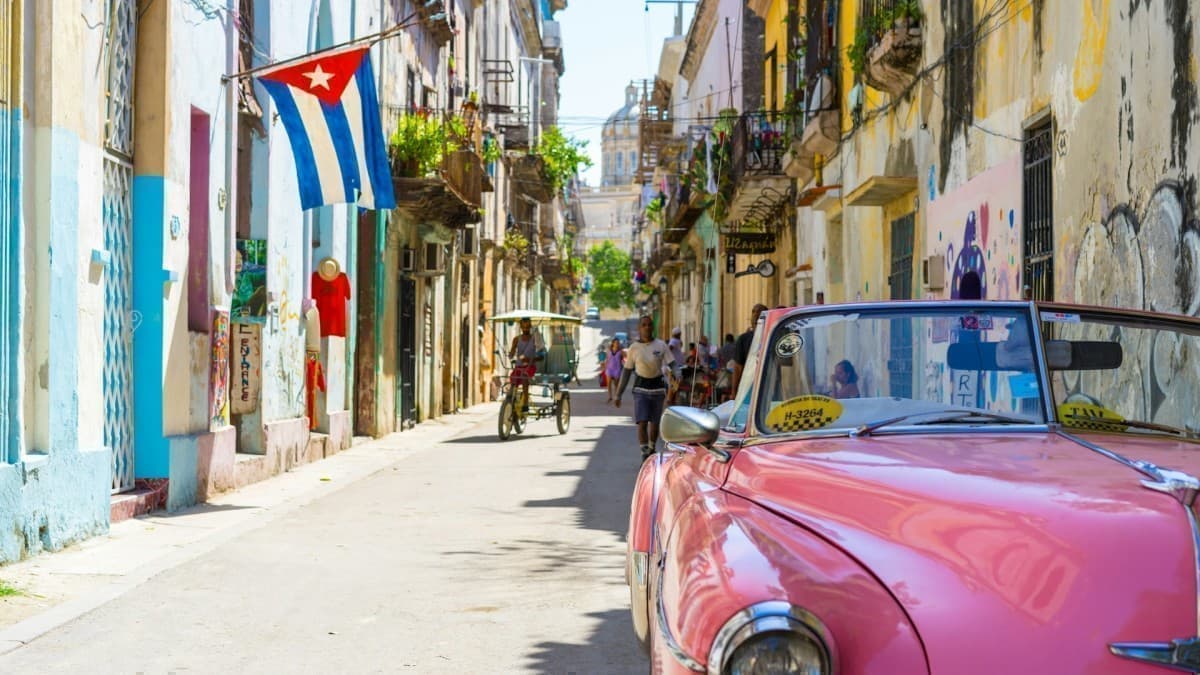
In the midst of an energy breakdown brought on by a US fuel boycott, Cubans were gradually regaining power on Tuesday following the third national power outage since the year's beginning.
Before US President Donald Trump shut off its oil supplies in January, the communist island was already having difficulty keeping the lights on and was running out of fuel for its power plants.
The state electrical provider, Union Electrica (UNE), declared a "total disconnection" to the entire island at noon on Monday, depriving the 9.6 million residents of the communist nation of electricity without giving a cause.
It reported early on Tuesday that more over thirty percent of the capital, including nine water distribution facilities and forty-three medical facilities, had power again.
Since late 2024, the island has seen eight blackouts
Lazaro Guerra, the Ministry of Energy and Mines' head of power, stated on state television late on Monday that the scarcity of fuel "undoubtedly complicates the restoration process," but he did not provide a timeframe for repairs.
"While the US attempts to trigger social unrest through strangulation by blocking fuel access to Cuba, the UNE is mobilizing to reverse the collapse of the National Electric System," Cuban President Miguel Diaz-Canel stated, blaming US sanctions policy on the island."It's heroic what electrical workers are doing in the face of a genocidal energy blockade," he continued.
The government is enforcing progressively severe power outages around the country in an increasingly desperate attempt to preserve fuel; in some parts of Havana, these outages can last up to 30 hours at a time, while in some rural areas, they can last up to 70 hours. This is when the most recent blackout happened.Self-employed social media community manager Meyboll Font, 51, stated, "Living like this is agony."
Font claims that although her neighborhood in Havana has only had "three or four hours of power a day," the blackout was harder since "you never know when it (electricity) will return.""We are unable to work due to the lack of electricity and WiFi," said a young software programmer working for a start-up in the tourism industry in a separate area.
According to Trump's order, the actions target Cuban officials deemed to have committed "serious human rights abuses" or corruption, as well as individuals known to "operate in or have operated in the energy, defense and related materiel, metals and mining, financial services, or security sector of the Cuban economy, or any other sector of the Cuban economy."
Cuba was already experiencing economic stagnation, and things became worse once Washington imposed a gasoline blockade in January. Since then, only one Russian oil tanker has been able to pass through.
Power outages and supply shortages are now commonplace, and tourism—once Cuba's most profitable sector—has drastically declined.Despite efforts to improve communication between the two nations, including a visit by senior US officials to the island in April, the restrictions are in place.
During the May 1 celebrations, which saw large crowds in Havana march to the US embassy under the banner "Defend the Homeland," Friday's new regulations went into force. Former revolutionary leader Raul Castro and Cuban President Miguel Diaz-Canel led the march.
Diaz-Canel had urged Cubans to organize "against the genocidal blockade and the crude imperial threats to our country," alluding to US policies and statements, the day before.Over six million signatures from Cubans "for the homeland and for peace" were reportedly gathered by authorities during the demonstration.However, others have questioned how the signatures were gathered.
Thousands more people were gathered in other Cuban cities, according to state media.
.jpg)
.jpg)
.jpg)
.jpg)
.jpg)