
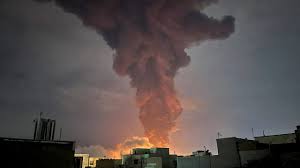
According to two Western officials briefed on the subject and two Iranian officials, Saudi Arabia launched multiple, covert strikes on Iran in retaliation for attacks carried out in the kingdom during the Middle East war. The attacks, which were not previously reported, represent the first time the kingdom is known to have directly carried out military action on Iranian soil and show it is becoming much bolder in defending itself against its main regional rival. The two Western officials assessed that the attacks, which were launched by the Saudi Air Force, were "tit-for-tat strikes in retaliation for when Saudi (Arabia) was hit." Reuters was unable to confirm the specific targets.
The Saudi attacks, which were not previously reported, are the first time the kingdom is known to have directly conducted military operations on Iranian territory and demonstrate that it is growing far more daring in its defence against its principal regional adversary.
According to the two Western sources, the Saudi Air Force initiated the attacks, which were estimated to have taken place in late March. All that was stated was that they were "tit-for-tat strikes in retaliation for when Saudi (Arabia) was hit."The precise targets could not be verified by Reuters.
Saudi Arabia, which has a close military relationship with the United States, has historically relied on the US military for protection, but the 10-week conflict has left the kingdom vulnerable to attacks that have penetrated the US military umbrella. Gulf Arab States Began Hitting Back Since the US and Israel launched airstrikes on Iran on February 28, Iran has hit all six Gulf Cooperation Council states with missiles and drones, attacking not only US military targets but also
Saudi Arabia has historically depended on the US military for defence due to its close military ties with the US, but the 10-week conflict has made the kingdom open to strikes that have breached the US military's defences.
Gulf Arab States Started Retaliating
The Saudi strikes highlight the conflict's expansion and the degree to which a war that started on February 28 when the US and Israel launched airstrikes on Iran has dragged in the whole Middle East in ways that have not been publicly acknowledged.
Iran has used missiles and drones to strike all six Gulf Cooperation Council nations since the US and Israeli assaults, targeting not just US military targets.The Wall Street Journal reported on Monday that the United Arab Emirates also carried out military strikes on Iran. Together, the Saudi and Emirati actions reveal a conflict whose true shape has remained largely hidden—one in which Gulf monarchies battered by Iranian attacks began striking back. However, their approaches have differed; the UAE has adopted a more hawkish stance, seeking to extract a cost from Iran and engaging in public diplomacy with Tehran only infrequently. Meanwhile, Saudi Arabia has maintained regular communication with Iran, including through Tehran's ambassador in Riyadh, who declined to comment. When taken as a whole, the Saudi and Emirati acts show a confrontation whose actual nature has been mainly concealed: one in which Gulf monarchies that had been harmed by Iranian attacks started retaliating.
However, they have not used the same strategy. The UAE has adopted a more assertive posture, attempting to extract a price from Iran and participating in public diplomacy with Tehran infrequently.
In the meantime, Saudi Arabia has maintained constant communication with Iran, including through Tehran's envoy in Riyadh, in an effort to stop the situation from getting worse. A request for comment was not answered by him.
Strikes, Then De-escalation The senior Saudi foreign ministry official stated: "We reaffirm Saudi Arabia's consistent position advocating de-escalation, self-restraint and the reduction of tensions in pursuit of the stability, security and prosperity of the region and its people." Iranian and Western officials claimed that Saudi Arabia informed Iran of the strikes, followed by intense diplomatic engagement and Saudi threats to retaliate further, which resulted in an understanding between the two nations would "show pragmatic recognition on both sides that uncontrolled escalation carries unacceptable costs."
Strikes, followed by de-escalation
According to Iranian and Western officials, once Saudi Arabia informed Iran about the strikes, there was extensive diplomatic contact and Saudi threats of future retaliation, which resulted in a de-escalation agreement between the two nations.
Retaliatory Saudi strikes on Iran followed by an agreement to de-escalate would "show pragmatic recognition on both sides that uncontrolled escalation carries unacceptable costs," according to International Crisis Group's Iran Project Director, Ali Vaez.
The informal de-escalation began the week before Washington and Tehran agreed to a ceasefire in their larger conflict on April 7. The White House did not reply to a request for comment. One of the Iranian officials confirmed that Tehran and Riyadh had agreed to de-escalate, stating that the move was intended to "cease hostilities, safeguard mutual interests, and prevent the escalation of tensions." This series of events would demonstrate "not trust, but a shared interest in imposing limits on confrontation before it spiralled into a wider regional conflict.
The week before Washington and Tehran agreed to a ceasefire in their larger fight on April 7, the unofficial de-escalation began. A request for comment was not answered by the White House.
The agreement between Tehran and Riyadh to "cease hostilities, safeguard mutual interests, and prevent the escalation of tensions" was verified by an Iranian official.The two major Shi'ite and Sunni Muslim nations in the Middle East, Iran and Saudi Arabia, have long been at odds and have supported opposing factions in conflicts throughout the region. In 2023, China mediated a détente between them, which resulted in a ceasefire between the Iran-backed Houthis in Yemen and Saudi Arabia that has since held. Unlike most Gulf states, Saudi Arabia has been able to continue exporting oil throughout the conflict because the Red Sea is still open to shipping.
They restored relations in 2023 through détente mediated by China, which included a ceasefire between Saudi Arabia and the Iran-backed Houthis in Yemen that has persisted to this day.
Unlike most Gulf governments, Saudi Arabia has been able to export oil during the crisis because the Red Sea is still open to commerce, which has allowed it to stay largely safe.Kingdom Avoided 'Furnace Of Destruction', Says Price Former Saudi intelligence chief Prince Turki al-Faisal summed up the kingdom's strategy in an opinion piece published in Saudi-owned Arab News over the weekend. He wrote that "when Iran and others tried to drag the kingdom into the furnace of destruction, our leadership chose to endure the pains caused by a neighbour in order to protect the lives and property of its citizens." The strikes came after weeks of escalating tension. On March 19, Sau
Former Saudi intelligence chief Prince Turki al-Faisal summed up the kingdom's strategy in an opinion piece published over the weekend in Saudi-owned Arab News, stating that "when Iran and others tried to drag the kingdom into the furnace of destruction, our leadership chose to endure the pains caused by a neighbour in order to protect the lives and property of its citizens."
The strikes by Saudi Arabia came after weeks of escalating hostilities.
Saudi Foreign Minister Prince Faisal bin Farhan stated that the country "reserved the right to take military actions if deemed necessary" during a press conference in Riyadh on March 19.
Iran's military attaché and four diplomatic employees were deemed personae non gratae by Saudi Arabia three days later.Iran Reduced Direct Attacks on Kingdom, Sources Say By the end of March, diplomatic contacts and Saudi Arabia's threat to adopt a more aggressive strategy similar to the UAE and retaliate further led to an agreement to de-escalate, according to Western sources. According to a Reuters tally of Saudi defence ministry statements, the number of drone and missile attacks on Saudi Arabia decreased from over 105 during the week of March 25–31 to just over 25 during the days preceding the broader ceasefire were thought to have come from Iraq rather than Iran.
According to the Western sources, an agreement to defuse the situation was reached by the end of March as a result of diplomatic contacts and Saudi Arabia's warning to adopt a more aggressive stance similar to the UAE and respond.
According to a Reuters count of Saudi defence ministry comments, the number of drone and missile assaults on Saudi Arabia decreased from over 105 during the week of March 25–31 to just over 25 between April 1–6.
Western sources concluded that projectiles fired against Saudi Arabia in the days preceding the broader ceasefire originated in Iraq rather than Iran, suggesting Tehran had limited direct strikes while partner organisations persisted.The Saudi defence ministry reported that 31 drones and 16 missiles were fired at the kingdom on April 7-8. This spike prompted Riyadh to consider retaliation against Iran and Iraq, while Pakistan deployed fighter jets to reassure the kingdom and urged restraint as diplomacy gathered pace. On April 12, Saudi Arabia summoned Iraq's ambassador to protest attacks from Iraqi soil. Despite this, Saudi-Iranian communication persisted.
When tensions arose at the beginning of the wider ceasefire between Iran and the US, the Saudi defence ministry said that 31 drones and 16 missiles were fired at the country on April 7-8. Despite this, communication between Saudi Arabia and Iran persisted.
As diplomacy picked up speed, Pakistan sent fighter jets to reassure the monarchy and called for moderation, while Riyadh considered reprisal against Iran and Iraq in response to the spike.
.jpg)
.jpg)

.jpg)
.jpg)
.jpg)