
One of the Election Commission of India's most important powers—determining which group of a split political party gets to inherit its name, identity, and electoral legacy—has once again come under scrutiny due to the dispute over the Trinamool Congress' distinctive flowers-and-grass emblem. The battle over a party's election symbol is resolved before the Election Commission, where opposing factions must prove that they, and not their rivals, are the "real" political party under the law. "Whenever there is a dispute, the Election Commission issues notices to the rival factions and asks them to substantiate their claims." However, political disputes frequently take place in legislatures and public gatherings.Former Chief Election Commissioner SY Quraishi told NDTV, "They must present their numbers and demonstrate why they think they are the true party."
The most recent of several high-profile conflicts over electoral symbols that have altered India's political succession is the Trinamool Congress issue. The Election Commission recognized one section as the original party and gave it the iconic bow-and-arrow emblem as a result of the Shiv Sena split, while the opposing camp received a new name and the fiery torch symbol. A similar contest took place in the Nationalist Congress Party months later, and the Commission decided which group would keep the party's clock emblem.
Article 324 of the Constitution gives the Election Commission superintendence, direction, and control over elections. The Representation of the People Act, 1951, and more especially the Election Symbols (Reservation and Allotment) Order, 1968, complement this constitutional responsibility. The Order controls how political parties are recognized, how electoral emblems are distributed, and how disagreements between recognized parties are settled.
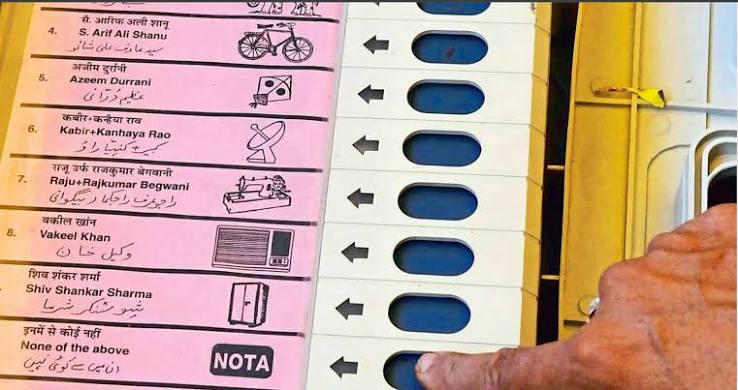
Campaign emblems are only one aspect of election symbolism. They have developed into political brands with decades of goodwill and public recognition, having been introduced to assist voters in identifying candidates regardless of literacy. They are divided into reserved and free symbols according to the Symbols Order.Free emblems are given to registered unrecognized parties and independent candidates, while reserved symbols are only given to recognized national and state parties. A party's reserved symbol becomes a unique electoral asset as it gains awareness.
The Election Symbols Order's Paragraph 15 governs the resolution of disputes involving recognized political parties. After reviewing the evidence presented to it, the Election Commission is empowered by this provision to decide which rival faction is entitled to the name and reserved symbol of the recognized party. "The Commission looks at the organizational strength of the party and the support it enjoys among Members of Parliament and Members of the Legislative Assembly." The primary party is designated as the group with the majority.
The party's own constitution is where the Commission's investigation starts. It investigates whether meetings of authorized bodies, office-bearer appointments, and organizational elections were carried out in compliance with the party's regulations. When opposing groups contest the legitimacy of those procedures or the constitution itself, the Commission looks beyond internal records to assess organizational control.
To ascertain which group dominates the party organization, membership registers, delegate lists, resolutions, meeting minutes, and affidavits are examined. By evaluating the strength of Members of Parliament and Members of Legislative Assemblies supporting each group, it independently confirms support within the legislative wing. The Commission's own precedents have developed these concepts, and the Supreme Court upheld them in Sadiq Ali v.
The Commission does not decide which faction has stayed true to a party's core values or resolve ideological disagreements. Its investigation is limited to the legal question of which faction, as defined by the Election Symbols Order, represents the recognized political party.
However, these proceedings seldom come to a swift conclusion.Because each claim and paperwork must be reviewed, it takes at least three months, according to Quraishi.
When elections are approaching, that timing becomes important. The Commission may issue an interim order if it is unable to complete the procedures prior to the start of the election process. Until a final judgment is made, both groups may be instructed to compete under alternate names and temporary symbols while the reserved symbol is frozen.
"The Commission can allot symbols even outside the list of free symbols, provided they do not resemble any existing symbol," Quraishi stated.
This maintains the integrity of the election process until the dispute is resolved and allows the Commission to choose unique interim emblems without confusing voters.
How these temporary solutions function in reality was demonstrated by the Shiv Sena issue. The opposing groups were given distinct names and temporary insignia to run for office prior to the Commission rendering its final decision. Before the Commission finally decided which faction constituted the recognized party, a similar process took place during the Nationalist Congress Party split.
If the Trinamool Congress disagreement is properly brought before the Election Commission under Paragraph 15, the decision will be based on organizational control, legislative support, and documented evidence rather than political assertions. Which side keeps the party's recognized status, its reserved emblem, and the electoral identity that has been developed over decades will be decided by the Commission.
.jpg)
.jpg)

.jpg)
.jpg)
.jpg)