
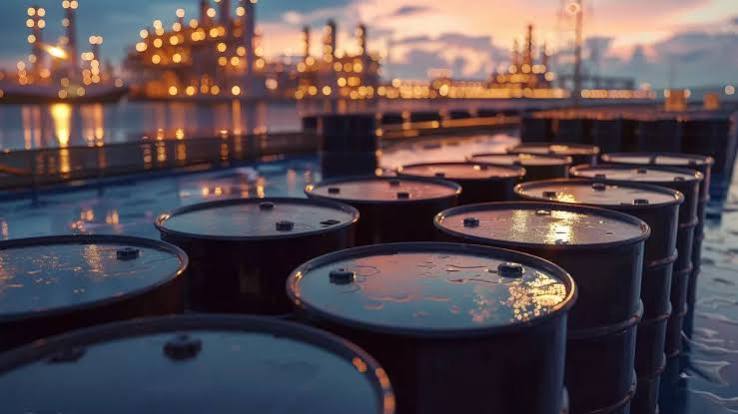
Building domestic oil and gas storage buffers against future shocks is a goal for vulnerable nations that suffered significant economic losses during the Iran conflict. This effort could result in an increase in demand of almost half a billion barrels in the future. It could have been far worse, even though the nearly complete blockage of the Strait of Hormuz cut off a fifth of the world's supply of oil and liquefied natural gas for more than three months, upending energy markets and driving Brent crude to about $120 per barrel.
The ability of the world to access emergency reserves was one important stabilizing factor. A record 400 million barrels were released from strategic petroleum reserves (SPRs) by all 32 countries of the International Energy Agency early in the conflict, with the United States making the largest contribution. A strategy developed in response to the 1973 Arab Oil Embargo, which requires IEA members to maintain emergency supplies equal to at least 90 days of net imports, was justified by the sixth drawdown since the energy watchdog's founding.A second lesson was provided by China. China has spent years constructing what is thought to be the largest SPR in the world, stockpiling more than a billion barrels to defend against such a catastrophe, while not being a full member of the IEA. Using this "rainy day fund," the biggest energy importer in the world cut its purchases of petroleum by over one-third during the conflict. It may not have depleted reserves as much as the import decline suggested, but it did indicate a readiness and capacity to use its reserves.
Beijing, which depends on the Middle East for almost 60% of its energy imports, saved billions of dollars by withdrawing from the market during a time of limited supply and high pricing. This also helped shield Beijing from the economic hardship observed elsewhere in Asia. India, Pakistan, Thailand, and other economies with low domestic reserves were especially hard hit. Governments used subsidies, fuel restrictions, shortened workweeks, and other austerity measures to reduce consumption because they lacked significant emergency stocks. Where fiscal space permits, many vulnerable importers are now likely to increase their SPRs, while those who cannot afford it might instead bolster demand-reduction strategies.
THE RUSH FOR SPR
It is obvious that India needs more strategic reserves. According to the IEA, it is the most populated country in the world, the third-largest importer of oil, the second-largest importer of cooking gas made from liquefied petroleum, and the single largest contributor to the growth of the world's oil demand through 2030.
However, India did not participate in the agency's coordinated reserve release during the conflict and is not a full member of the IEA. Only eight days' worth of imports are covered by its reserve; more than 400 million extra barrels, at a cost of almost $28 billion at $70 per barrel, would be needed to achieve the IEA's 90-day threshold.
Other nations, such as Singapore, the leading oil-refining center in Asia, are also thinking about constructing or growing strategic oil and gas storage. In order to control seasonal demand, especially during the winter, Europe already has a sizable gas storage system. However, the region may decide to construct more government-controlled storage because imported LNG now makes up more than 40% of its gas supply, with the United States accounting for over 60% of those imports.
Energy companies are also heading in this manner. In order to maintain export flexibility during a crisis, Gulf national oil corporations are looking for additional storage outside the region. Saudi Aramco, which now runs storage facilities in Egypt, Japan, South Korea, and northwest Europe, has indicated that it is thinking about growing even more.
IMPACT OF OIL PRICE
Based on ROI projections, these additional storage plans could need about 500 million barrels of oil and processed products when combined. Refilling depleted inventory is also necessary. According to the IEA, since the beginning of the conflict, almost 400 million barrels have already been taken from worldwide supplies, and even once Hormuz reopens, withdrawals are probably going to continue until the summer.
All of it adds up to almost 1 billion barrels of extra demand. It would offer substantial price support even if it were dispersed across a number of years. The timing could be advantageous. As Middle Eastern production improves, the IEA predicts that the world's oil output will soar next year, possibly surpassing demand by more than 4 million barrels per day.
If Gulf supply returns more slowly than anticipated, either due to logistical issues or a breakdown in the unstable new balance of power in the Middle East, that might not hold.
This "urge to hoard" has much more complicated long-term effects. A world with much higher strategic reserves might be more shock-resistant, which could eventually stabilize prices. Similar to China, nations like India may cut back on purchasing during times of limited supply if they have larger buffers in place, which would lessen price surges. The lesson for importers is evident as the Hormuz shock fades: "impossible" interruptions can occur, persist longer than anticipated, and strike hardest in areas without a buffer.
.jpg)
.jpg)

.jpg)
.jpg)
.jpg)