
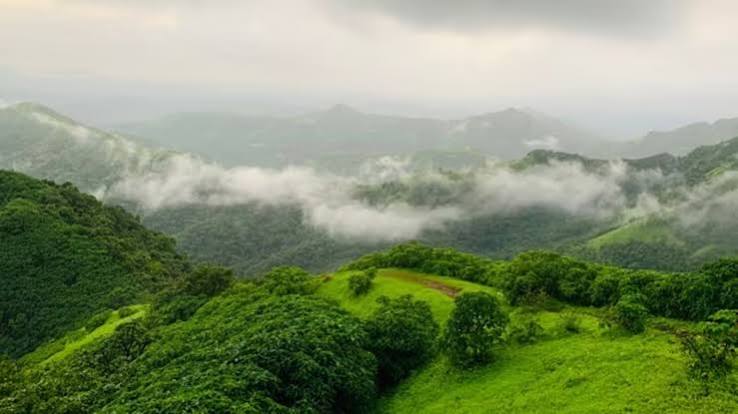
According to sources, the Western Ghats regions of Gujarat, Goa, and Maharashtra would be designated as "Eco-Sensitive Areas." This will contribute to the preservation of one of the world's most important hotspots for biodiversity.
Based on suggestions from a committee led by former ISRO Chairman K. Kasturirangan, the proposal called for notifying an area of roughly 56,000 square kilometers spread over six states.
In order to protect the environment, the plan will prohibit a number of activities, including as mining, building power plants, coal-based power plants, polluting industries, and large-scale construction projects. Additionally, it will promote sustainable development for the local population and stop harmful commercial activity.Gujarat, Goa, Maharashtra, Kerala, Karnataka, and Tamil Nadu were the six states that were originally supposed to fall under its purview. However, Kerala and Karnataka are opposed to the proposal.
Kerala intends to decrease its designated Eco-Sensitive Area, according to sources. Karnataka is challenging the entire exercise's justification.
The planned prohibitions on mining, quarrying, and the creation of new businesses are at the heart of both states' objections. A significant portion of Kerala's population resides in and around the suggested buffer zones.
According to sources, the administration would immediately alert the three states' Eco-Sensitive Areas. The Western Ghats' environmental protection initiatives will be strengthened if the notification is issued for even three states.According to UNESCO, the Western Ghats are among the eight "hottest hotspots" of biological diversity in the world.At least 325 globally vulnerable plant, animal, bird, amphibian, reptile, and fish species can be found in the site's forests, which contain some of the best examples of non-equatorial tropical evergreen forests worldwide, according to UNESCO.
Based on the suggestions of the Kasturirangan-led committee, the Environment Ministry released the first draft notification for the ESA in March 2014. The Gadgil committee's proposal to designate 64% of the Western Ghats as ESA was reduced to 37%.
.jpg)
.jpg)

.jpg)
.jpg)
.jpg)