
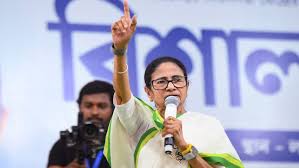
West Bengal's legislative parliament has been formally dissolved by Governor RN Ravi after departing Chief Minister Mamata Banerjee refused to step down.
The assembly's tenure was scheduled to end on Thursday at 12 a.m. The Raj Bhavan released a letter "for general information" last night.
The single-line communication read: "In exercise of the power conferred on me by sub-clause (b) of Clause (2) of Article 174 of the Constitution of India, I hereby dissolve the Legislative Assembly of West Bengal with effect from 07th of May 2026".
It has been predicted that the legal dispute over Bengal may go to court as Banerjee continues to accuse others of misconduct during the Assembly Elections.
What the Constitution Says The constitutional position is rather clear, according to Swapnil Tripathi, Lead at Charkha, the Constitutional Law Centre of the Vidhi Centre for Legal Policy, who spoke to NDTV. The Council of Ministers' institutional foundation ends when the Assembly is dissolved in accordance with Article 174(2)(b).Under such circumstances, the departing Chief Minister may, at most, serve as a caretaker until a new government is sworn in, preferably at the Governor's request. However, the Governor has some latitude in handling this transitory period because it is a matter of constitutional convention rather than an enforceable regulation, Tripathi clarified.
"Mamata Banerjee's refusal to resign does not materially alter the constitutional position," he continued.Therefore, the creation of the new Assembly and the invitation to the leader who has the support of a majority of the newly elected MLAs to form the government are the immediate next steps.
Choices Prior to Mamata Bannerjee
Mamata Bannerjee has no practical way to stake claims to the position of Chief Minister.
Tripathi clarified that as there is no House to whom the government can be held collectively accountable, the dissolution of the Assembly precludes any claim to remain in office as a normal Chief Minister."The trust of elected MLAs gives the Chief Minister democratic legitimacy, and that institutional basis is lost when the Assembly dissolves. Therefore, Mamata Banerjee cannot remain in her position as Chief Minister beyond a temporary caretaker arrangement due to the lack of a direct constitutional remedy.
Courts and the Election Petition Process
Tripathi further told NDTV that the Representation of the People Act, 1951, offers a precise and well-defined mechanism—an election petition—in the event that there are complaints about the electoral process or outcomes.
In order for the petitioner to prove a breach of the Representation of the People Act in connection with a particular constituency election, such challenges must be filed in compliance with statutory procedure and decided by the relevant High Court.
.jpg)
.jpg)

.jpg)
.jpg)
.jpg)