
.jpg)
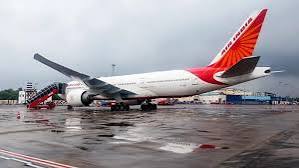
A Memorandum of Understanding (MoU) has been signed by Hindustan Aeronautics Limited (HAL) and the Public Joint Stock Company United Aircraft Corporation (PJSC-UAC) of Russia to manufacture the SJ-100, a passenger aircraft, in India for the first time.
Hindustan Aeronautics Limited (HAL) said in a press release that the deal was signed in Moscow on Monday.
"HAL and Public Joint Stock Company United Aircraft Corporation (PJSC-UAC) Russia signed an MoU for production of civil commuter aircraft SJ-100 in Moscow, Russia on October 27, 2025," HAL wrote on X, providing information about the signing.
There are now over 16 commercial airline operators using the twin-engine, narrow-body SJ-100.
There are now more than 200 of these aircraft in production.
HAL would be able to produce the SJ-100 for domestic Indian consumers under the new agreement, which is considered essential for improving short-haul connectivity under the government's UDAN program.
With this partnership, India will construct a "complete passenger" aircraft for the first time since the AVRO HS-748 project, which started in 1961 and terminated in 1988.
The announcement claims that the trust between HAL and UAC, which has grown over years of working together on aerospace projects, is reflected in their partnership.
It is anticipated that the project will assist in meeting India's expanding aviation needs.
It is anticipated that the project will assist in meeting India's expanding aviation needs. According to industry estimates, the nation will need more than 200 planes in this category over the course of the next ten years in order to improve regional connectivity. An additional 350 aircraft would be needed to serve the Indian Ocean region and adjacent international tourism routes.
"A new era in the history of the Indian aviation industry begins with the production of the SJ-100 aircraft. "It's a step towards realising the 'Aatmanirbhar Bharat' dream in the civil aviation sector," the statement stated.
According to HAL, the initiative is anticipated to increase domestic manufacturing, provide doors for the private sector to participate, and create direct and indirect jobs along the aviation value chain.
.jpg)
.jpg)

.jpg)