
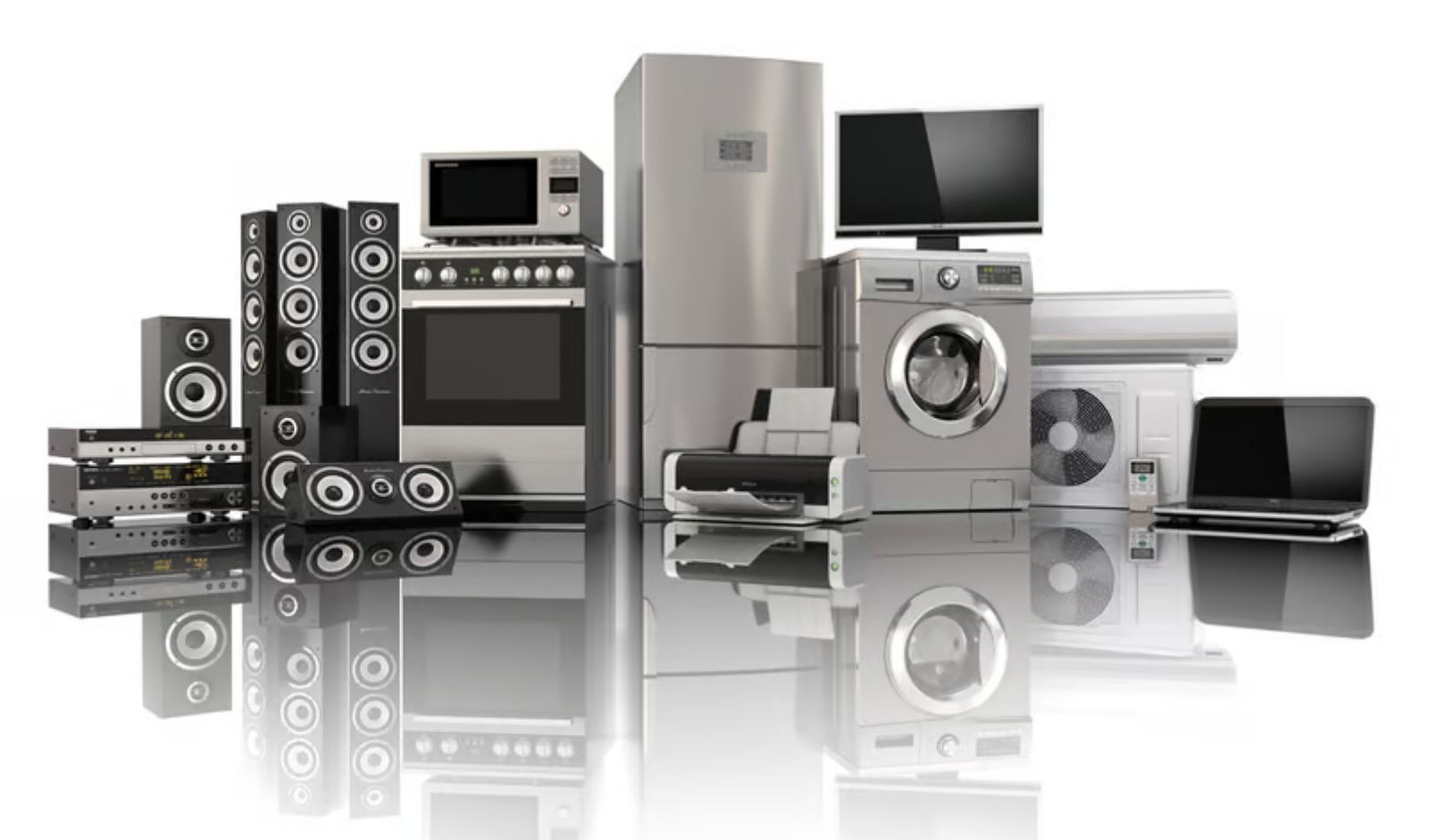
The consumer durables market in India is about to enter a new stage of competition. Two days later, two very different companies announced their goals. By drastically cutting Bosch's entry-level costs and introducing items in segments it had long shunned, German appliance behemoth BSH Home Appliances made the decision to make its first global entry into the Indian mass market. Nearly simultaneously, as smartphone growth slows, Xiaomi announced plans to enter the Indian market for major household appliances.
These actions follow a year in which some of the largest consumer brands in the world engaged in acquisitions, stake sales, private equity participation, and ambitious expansion ambitions. One of the most sought-after growth prospects in international consumer markets is India's housing market.
Why everyone is vying for a share of the Indian appliance industry
It is easy to understand the fascination. With a compound annual growth rate (CAGR) of over 11%, India's consumer durables industry is predicted to reach almost Rs 3 lakh crore by FY29, making it one of the fastest-growing major industries in the world. Millions of homes are entering the market for refrigerators, washing machines, air conditioners, and televisions due to rising earnings, faster urbanization, deeper electrification, and greater access to consumer financing.
The possibility is especially attractive because penetration rates are still relatively low in a number of areas. Washing machines, microwave ovens, and dishwashers still have a lot of room to develop, even though refrigerators are now found in a large percentage of homes. This implies that businesses are competing for more than just market share. Additionally, they are vying for brand-new customers who are joining these categories for the first time.
Tier II and Tier III towns, where aspirations are rising quickly and buyers are willing to spend more on convenience, energy efficiency, and luxury features, are increasingly driving the next wave of demand. In urban India, premiumization is still present, opening up opportunities on both ends of the market.
Bosch destroys their outdated India strategy
BSH Home Appliances' decision to completely reconsider its India strategy may be the most obvious indication of how competitive the market has gotten. Bosch and Siemens prioritized premium and upper-mid-market customers for many years. In a nation where volume growth comes from more cheap categories, this stance constrained the brands' reach but provided them a solid reputation. BSH has recently admitted that their India strategy was lacking the value sector.
The company has entered areas including semi-automatic washing machines and direct-cool refrigerators, cut prices in some entry-level categories by almost 20%, and lowered Bosch's premium over LG and Samsung to only 2-4% from roughly 15% previously.
Additionally, it is introducing more than 350 new models this year—the most in its Indian history.
The relevance goes beyond pricing. BSH's worldwide organization now includes India as a distinct area, and the business intends to increase localization levels from the current 65% to 90%. This could eventually make it possible for India to develop become a hub for exporting goods to other developing markets. India is now viewed as a strategic growth engine rather than a specialized luxury market.
Xiaomi considers more than just smartphones
Xiaomi is a technological firm looking for its next growth engine, whereas Bosch is an incumbent expanding its reach. In India, smartphone adoption has reached a mature state, and shipment growth has significantly slowed. Xiaomi's entry into major appliances like air conditioners, refrigerators, and washing machines represents a long-term commitment to India as well as a diversification plan.
The company thinks it can replicate that strategy locally and now offers such products in a number of Southeast Asian markets. In contrast to its previous efforts to launch ecosystem items through imports, Xiaomi is currently searching for local manufacturing partners and constructing a structure focused on India to facilitate the growth.
There are obstacles facing the Korean behemoths from every angle
LG and Samsung have dominated India's consumer durables market for more than 20 years. Their early industrial investments, wide distribution networks, and solid customer trust were the foundation of their dominance. However, the competitive environment surrounding them is continuously evolving.
Conventional competitors like Haier and Godrej are still rapidly growing. Bosch is getting cheaper. Xiaomi is making a technological entry. Local businesses are making significant investments in product research and manufacture. At the same time, new categories like connected home goods and AI-enabled appliances are giving rivals a chance to set themselves apart.As a result, the market is getting more competitive and congested than it was even three years ago.
Bharti and Reliance bring a fresh perspective
The entry of India's biggest companies is what has actually changed the competitive landscape. Reliance Industries previously partnered with BPL, purchased Kelvinator, and introduced the Wyzr brand. Its approach, which uses scale, distribution, and price power to upend entrenched companies, is similar to the playbook it successfully employed in telecom and retail. The ecosystem of Reliance is its biggest benefit. It may be able to get appliances to customers more effectively than many of its more established rivals thanks to its extensive retail network, internet platforms, financing options, and transportation infrastructure.
A distinct approach has been adopted by Bharti Enterprises. Instead of starting from scratch, it partnered with Warburg Pincus to purchase a share in Haier India. While the move is now positioned as an investment rather than an operational entry, it places Bharti alongside one of the fastest-growing players in the business.
These corporations' participation suggests that consumer durables are no longer seen as a specialized manufacturing industry. The sector is becoming more and more recognized as a significant consumer enterprise with long-term growth potential.Dealmaking frenzy indicates a more profound change
The surge in sales over the past year reflects the growing excitement surrounding the industry. Global private equity firms and strategic purchasers expressed interest in the proposed Whirlpool India stake sale, but it ultimately fell through.
Warburg Pincus and Bharti purchased a portion of Haier India. The Morphy Richards brand rights were acquired by Bajaj Electricals. Urban Company began producing appliances in addition to services. Large investments in new factories and localization initiatives were announced by major manufacturers in the meantime.
These changes imply that a phase of industry consolidation is about to begin. As businesses look to boost distribution, increase manufacturing efficiency, and absorb growing investments in technology and localization, scale is becoming more and more crucial. Due to the industry's combination of promising development prospects and chances for operational consolidation and improvement, private equity interest has also increased.
The new battleground is localization and smart homes
Price is no longer the only factor in competition. Businesses are rushing to adapt products to Indian circumstances, localize supply chains, and lessen reliance on imported components. Products made for energy efficiency, voltage fluctuations, and hard water are becoming more and more crucial differentiators.
Concurrently, a new front is being opened by linked home technology and artificial intelligence. If consumers can perceive real advantages in terms of convenience, energy savings, and long-term running costs, they are more likely to upgrade to smarter appliances. In response, manufacturers are making investments in local R&D, AI-enabled technologies, and linked ecosystems that can connect home networks, cellphones, and appliances.
A market that is about to enter its most competitive phase
The market for consumer durables in India is no longer dominated by a small number of international brands. It is become one of the most contentious sectors in the nation. The most recent indications of this change are Xiaomi's entry into major appliances and Bosch's plan to enter the mass market. They are part of an increasing number of companies, including Reliance, Bharti, Haier, LG, Samsung, and others, that view Indian households as the next big growth opportunity.
Businesses will be compelled to localize more quickly, develop more aggressively, and price products more competitively as competition heats up. Customers should benefit from more options, better technology, more value, and, of course, better offers and more affordable rates. The fight for India's living rooms, kitchens, and bedrooms may become one of corporate India's most intense rivalries as the industry enters a new phase.

.jpg)
.jpg)

.jpg)