
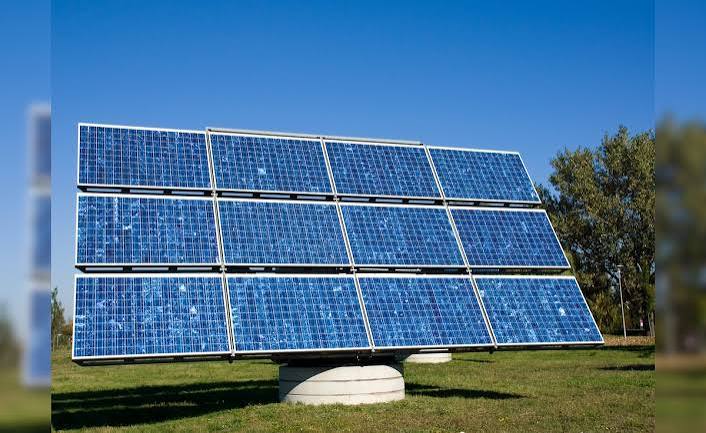
The UN climate chief said in Delhi on Tuesday that India has officially become a "solar superpower" because to a record surge in green energy and a highly skilled workforce.
Simon Stiell, Executive Secretary of the United Nations Framework Convention on Climate Change (UNFCCC), told reporters that climate action is turning out to be a game-changer for the Indian economy.
He cited two major reasons for the quick switch from fossil fuels to renewable energy: India's young, highly qualified workforce and the startling growth of solar infrastructure.Since 2014, the installed capacity of solar power has increased more than fifty times. India has become a solar powerhouse. In the quickly intensifying global race for sustainable energy, "India has powerful competitive advantages, particularly your tech-savvy workforce," according to Stiell.
Much earlier than expected, the nation's drive for green energy has reached significant benchmarks. Currently, half of India's installed capacity is produced without the use of fossil fuels. The fact that India accomplished its goal five years ahead of plan is noteworthy.
According to the UN climate head, the central government deserves credit for collaborating with enterprises and the broader public.According to recent data from the International Renewable Energy Agency (IRENA), India's solar manufacturing capacity has increased 75-fold since 2014, making it the world's most competitive solar industry in terms of generation prices. Compared to other major global economies, the nation is producing solar power at a lower cost.
Additionally, the nation's reliance on solar and other renewable energy sources saved a staggering $18 billion in fossil fuel expenditures last year alone. Every solar panel added, according to Stiell, brings the nation closer to achieving genuine energy independence and protects the economy from the volatile price fluctuations of global oil and gas markets.
Currently, more than 85% of India's crude oil comes from imports. Fuel, transportation, and fertilizer prices can be impacted by the cost of importing fossil fuels when international conflicts disrupt supply chains. According to the UN official, India is gradually liberating itself from "the whims of foreign powers waging unpredictable wars" by switching to solar and other renewable energy sources.
Although the hardware of solar panels and wind turbines is still important, Steill claimed that India's real advantage is in its human resources.Globally, a new industrial revolution based on green infrastructure, smart grids, and renewable energy is emerging. A record $2 trillion was invested globally in clean energy last year. India is in a prime position to take a sizable portion of this investment, Stiell noted.
India can quickly become the world's leading clean technology manufacturing hub because to its enormous number of engineers, IT specialists, and technical experts. By concentrating on sectors where it already has a distinct advantage, such as electronics, software-driven smart grids, and the production of green steel, the nation can create millions of new jobs and accelerate economic growth.
The electric vehicle (EV) market is already expanding quickly, driven by domestic automakers. The shift to sustainable transportation is being accelerated by local initiatives like Delhi's new EV legislation.
Caribbean-born Steill used the game of cricket to illustrate the enormity of India's potential. He compared India's rise in clean energy to that of rising star Vaibhav Sooryavanshi and cricket great Sachin Tendulkar.
According to Stiell, India has "a stellar record, but the story is just getting started," and if the nation continues to double down on renewable energy, the upcoming chapters promise to be quite remarkable.However, the UN official warned that the globe is rapidly approaching hazardous climate tipping points as a result of the ongoing use of coal, oil, and gas. In Asia, brutal heatwaves are taking lives and destroying livelihoods, while El Niño's effects and erratic monsoon are endangering farm crops and driving up food costs for average households.
By accelerating the transition from coal to clean energy, India can address these problems head-on.Renewable energy sources result in reduced costs and increased energy security, which can improve food security and health, as stated by Minister Pralhad Joshi. Clean technologies provide economic stability and national sovereignty while shielding homes and businesses from the chaos caused by the cost of fossil fuels," Steill continued."International cooperation and funding can sustain the momentum," Steill added, reminding wealthier nations of their financial obligations to developing nations. He stated that all financial obligations must be fully fulfilled.
By 2035, developed countries are expected to increase their adaptation finance and provide $300 billion annually, setting the stage for a more ambitious target of $1.3 trillion annually to assist developing countries in creating clean, disaster-resilient economies. Many nations are anticipated to receive substantial fresh funding from the recently operationalized UN carbon market.
.jpg)
.jpg)
.jpg)
.jpg)
.jpg)
.jpg)