
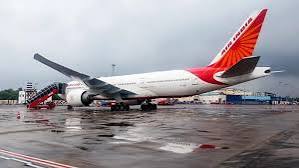
India has launched talks on a regulatory change that would allow airport operators to own and control airlines, according to sources familiar with the topic, possibly creating a road for the Adani Group and GMR Airports Ltd. to establish their own carriers.
Current rules restrict the operators of airports in Delhi and Mumbai from owning more than 10% interest in any airline, said the persons, who asked not to be identified since the negotiations are private.
The debates are underway within India’s Ministry of Civil Aviation, and any waiver is expected to require legal certification from the law ministry as well as approval of the federal Cabinet led by Prime Minister Narendra Modi, the people added.
A loosening of ownership rules would allow the Adani Group — whose company operates the Mumbai airport and seven others — and GMR Airports, which oversees the New Delhi airport and four further facilities in India, to own airlines. The purpose of the program is to broaden competition in the market at a time when IndiGo and Air India control approximately 90% of domestic capacity.
While it could relieve the near-duopoly the top two carriers enjoy over India’s skies, it also raises the risk of fresh imbalances, like airport operators possibly giving key slots to their own carriers.
The civil aviation ministry didn’t immediately respond to an emailed request for comment.While new entrants may theoretically lessen that concentration, the worldwide lack of airplanes remains a substantial restriction. Delivery delays at Airbus SE and Boeing Co. have hampered growth ambitions worldwide , with pandemic-era supply chain bottlenecks continuing to constrain availability.
Joint ownership between airports and airlines has not been very successful commercially. Local governments in the US are virtually prohibited from using airport money for airline businesses by Federal Aviation Administration revenue-diversion regulations and strict public ownership of key airfields. In the European Union, joint ownership is technically allowed, but vigorous antitrust enforcement makes it functionally unviable.
The Adani Group already has an outsized impact throughout India’s infrastructural and industrial landscape — from being the country’s largest private ports operator to becoming its second-largest cement maker. In energy, the group’s presence encompasses thermal power, city-gas distribution and solar development. Its status as the one of the nation’s top airport operators lately spurred concerns about its rising power.
Minimal Competition
The number of Indian airlines has narrowed considerably during the previous decade.
In the world's fourth-largest aviation market, IndiGo and Air India now hold a dominant position thanks to the demise of Jet Airways India Ltd. and Go Airlines India Ltd., as well as the merger of Vistara and AirAsia India under the Tata Group. Newer players like Akasa Air, faltering incumbents like SpiceJet Ltd., and smaller regional carriers operating on the periphery.
During IndiGo's operational crisis in December of last year, when the airline, which handles over 60% of domestic passenger traffic, delayed thousands of flights primarily because of pilot shortages, worries about the duopoly grew.
Due to the substantial disruption of air travel and the lack of viable alternatives, Indian Railways had to operate special trains to transport passengers who were stranded.
Future expansion may also be hampered by the small number of carriers. The International Air Transport Association predicts an additional 425 million passengers by 2044, nearly doubling current 2024 levels, while India intends to treble the number of airports to 350 by 2047.
.jpg)
.jpg)
.jpg)
.jpg)
.jpg)
.jpg)