
.jpg)
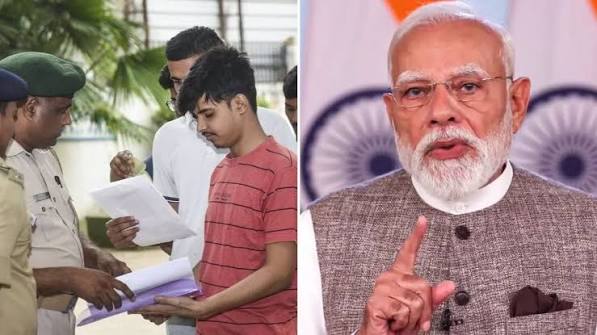
In a phone call with Iranian President Masoud Pezeshkian on Saturday, Prime Minister Narendra Modi condemned attacks on critical infrastructure in West Asia and urged keeping critical shipping lanes "open and secure" amid major disruptions in global energy supplies due to Tehran's blockade of the Strait of Hormuz.
Significantly, the Iranian president proposed establishing a regional security framework with West Asian countries to provide peace and stability to the region "without foreign interference," according to an Iranian readout of the meeting.
Pezeshkian also asked India, as the current BRICS chair, to use its "independent role" to put an end to the US-Israeli hostility toward Iran.According to the readout, the president dismissed Washington's accusations that the US started a military offensive against Iran to prevent it from obtaining nuclear weapons.
Pezeshkian further stated that the late supreme leader, Ayatollah Ali Khamenei, was "firmly opposed" to nuclear weapons and had issued both administrative and religious directions preventing their development.
Separately, External Affairs Minister S Jaishankar spoke with his Iranian colleague, Seyed Abbas Araghchi, about the situation in West Asia and its repercussions for the greater region.
In a post on 'X', Modi said he sent Eid and Nowruz greetings to Pezeshkian and hoped that the holiday season brought peace, stability, and prosperity to West Asia.
"Condemned attacks on critical infrastructure in the region, which endanger regional stability and disrupt global supply chains." The prime minister emphasised the necessity of maintaining free navigation and secure shipping waterways.He appreciated Iran's sustained assistance for the safety and security of Indian nationals in Iran.
This is Modi's second phone chat with Pezeshkian in the last ten days.
The two leaders' talks came amid growing global alarm over new attacks on West Asian gas facilities.
The president emphasised Iran's consistent willingness to participate in discussions with world leaders, particularly on the margins of the United Nations, for "verification and oversight" of Tehran's peaceful nuclear programs, Tehran said in a statement.The speaker harshly condemned the acts of the US and Israel against Iran, calling them "profoundly inhumane and unethical."The president recommended establishing a regional security framework for West Asian countries to promote peace and stability via collaboration without external interference.He went on to say that the immediate stop of aggression by the United States and Israel is a prerequisite for ending the war and turmoil in the region.
According to the Iranian readout, PM Modi stressed the necessity of safeguarding the Strait of Hormuz's security and freedom of navigation in the Persian Gulf."In this context, referring to his consultations and discussions with various world leaders, PM Modi emphasised that choosing the path of war is in no one's interest; therefore, all parties should move toward peace as soon as possible," according to the report.
Global oil and gas prices have risen after Iran effectively closed the Strait of Hormuz, a narrow shipping passage between the Persian Gulf and the Gulf of Oman that transports around 20% of global oil and LNG (liquefied natural gas).
West Asia has been an important source of Indian energy acquisition."President Pezeshkian further stated that the US targeted the school in Minab from bases located in neighbouring countries hosting US military installations, leading to the tragic martyrdom of 168 innocent schoolchildren," reported the newspaper.
As concerns grew about the deteriorating situation in West Asia, PM Modi met with several leaders in recent days, including Oman's Sultan Haitham bin Tariq, Jordan's King, French President Emmanuel Macron, and Malaysian Prime Minister Anwar Ibrahim.
.jpg)
.jpg)
.jpg)