
.jpg)
As rising oil prices, interrupted trade routes, and erratic money flows reverberate across international markets, India's economy is starting to feel the effects of the crisis in West Asia. However, the economy is still "resilient, though shaken," according to the Finance Ministry's most recent monthly economic review, which highlights robust domestic demand, stable financial conditions, and policy buffers as important shock absorbers.
But it's not an easy task. Risks related to energy imports, supply chains, exports, and inflation have all increased as a result of the conflict. This increases the likelihood of a growing external imbalance and slower growth.
Even as inflation risks rise due to unpredictable commodity prices, the Reserve Bank of India (RBI) cautioned in its April bulletin that increased input costs and supply disruptions could limit the availability of essential inputs and hinder growth.
India is now in a precarious situation, vulnerable to shocks from around the world but better equipped than in past crises. The Finance Ministry states in the April review report that although inflation concerns are increasing and global growth is predicted to decrease, India's growth momentum is still comparatively strong thanks to local factors. This assessment is supported by the RBI, which claims that the Indian economy's foundations are stronger and more resilient to shocks than they were in the past.
Therefore, the tale of India's reaction to the war shock is one of absorption, adaptation, and minor repositioning rather than insulation.
A shock with several channels
The conflict's economic effects are spreading across a number of interrelated pathways.
Export vulnerability to the Middle East, reliance on natural gas and crude oil, production interruptions in energy-intensive industries, and wider trade concerns as transportation prices rise are the four main paths, according to Dipti Deshpande, principal economist at Crisil.
These dangers are already apparent. In times of such global tensions, the Finance Ministry identifies pressure on input costs, supply chain interruptions, and spikes in energy prices as urgent concerns.
In a similar vein, the RBI warns that shipping route delays and growing freight and insurance costs may have an impact on exports and limit production.
The vulnerability is increased by India's exposure to the area. According to Deshpande, any protracted interruption might increase the current account deficit and put pressure on the currency because the Middle East accounts for over 13% of India's exports and approximately 38% of remittance inflows.
The burden is already being felt by industry. Shipment delays, growing transportation costs, and shortages of essential inputs across industries reliant on cross-border supply chains have all been noted by the Confederation of Indian Industry (CII).
Pressures from inflation and energy shock
The energy shock is at the core of the crisis.
Inflation and the import bill are directly at danger due to rising crude oil prices, which have been around $110 per barrel in recent weeks, according to the Finance Ministry report. The RBI adds that the inflation outlook is now significantly uncertain due to the volatility of global energy prices, with upside risks becoming more noticeable.
The effect on customers has been mitigated thus far. Through price restrictions and tax modifications, the government has partially absorbed the blow to fuel prices, assisting in the short-term containment of headline inflation.
However, this buffer might not last forever. Deshpande warned of wider inflation pressures from growing input costs, saying that persistently high petroleum prices will eventually have to be passed on.
In its April bulletin, the RBI predicted inflation for 2026–2027 at roughly 4.6%, but cautioned that risks related to weather and energy prices could cause it to rise.
Trade disruption and outside threats
A mixed picture is presented by the foreign sector.India has developed structural strength, on the one hand. According to the Finance Ministry, exports have hit all-time highs, with services exports serving as a crucial safety net.However, short-term pressures are increasing.
India's imports fell 6.5% to $59.59 billion from the previous year, while exports fell 7.44% to $38.92 billion in March, the worst reduction in the previous five months.
According to the central bank data, the trade imbalance grew from $283.5 billion in FY25 to $333.2 billion in FY26. This was caused by a slowdown in global commerce brought on by geopolitical tensions as well as an increase in imports and a decline in exports.
Inflationary pressures and supply bottlenecks could be exacerbated by shipping interruptions in vital routes like the Strait of Hormuz, which passes through a large portion of the world's oil traffic.
Stressed but stable markets
The volatility has also affected financial markets.
Global risk aversion is reflected in the substantial cash withdrawals made by foreign portfolio investors in recent months. According to an ET report, foreign investors had already withdrawn Rs 1.8 lakh crore in the first four months of 2026, exceeding the total withdrawal for the prior year. However, local investors have intervened as a stabilising factor.
Tejas Khoday, co-founder and CEO of FYERS, told ET Online that "domestic capital now sustains market valuations," citing robust retail involvement via systematic investment plans (SIPs). "Stocks would have collapsed under FII selling pressure without this cushion."The overall picture of stability is supported by the RBI's data. India's foreign exchange reserves, at $697.1 billion as of April 3, cover over 11 months' worth of imports despite capital outflows, and the banking system's liquidity circumstances are still favourable.
Pillars of resilience: Why India is enduring
1. The main buffer is domestic demand
Domestic consumption is the most significant stabiliser.
Domestic consumption accounts for more than 60% of India's GDP. Thus, from a high-level standpoint, this offers a natural defence against international affairs," Khoday stated. The central bank claims that private investment and consumption continue to be important sources of economic impetus.
Even while growth is slowing, the Finance Ministry's high-frequency indicators, which include GST revenues and car sales, indicate that demand is still strong.
2. Robust balance sheets and financial systems
India does not have a balance sheet issue going into this shock, in contrast to earlier crises.
Strong capital adequacy, enhanced asset quality, and strong liquidity buffers are maintained by banks and non-banking financial firms, according to the RBI bulletin.
Additionally, corporate leverage is comparatively modest, allowing businesses to withstand cost pressures and make investments once things settle down.
3. State reaction and policy flexibility
The government has responded quickly and in a number of ways. Fuel price cushioning, export assistance through programs like the Rs 497 crore RELIEF (Resilience & Logistics Intervention for Export Facilitation) package, diversification of crude sources, and actions to stabilise supply chains and currency are some of its main relief initiatives.
"The response... has been quick, calibrated, and continuous," stated CII Director General Chandrajit Banerjee, emphasising the government's and industry's concerted efforts.
The RBI, for its part, has maintained a liberal monetary posture while guaranteeing ample liquidity to support growth.
4. Macro stability and external buffers
An extra degree of security is offered by India's macro roots.
Remittance inflows are consistent, foreign exchange reserves are robust, and surplus is still produced by services exports.
According to the Finance Ministry's April economic review, India's total services exports reached almost $418 billion, indicating that services exports continue to act as a buffer.
According to Deshpande, "remittances from the Middle East account for about 38% of India's total inflows and could slow in the short term."
These buffers lessen the possibility of a balance-of-payments catastrophe even though current account risks are increasing.
How to escape the devastation of war
India's future will be determined by structural reform if resilience characterises its current state. According to Deshpande, "the current crisis highlights the need to accelerate long-term structural reforms, including energy transition, supply chain diversification, and productivity-enhancing measures."
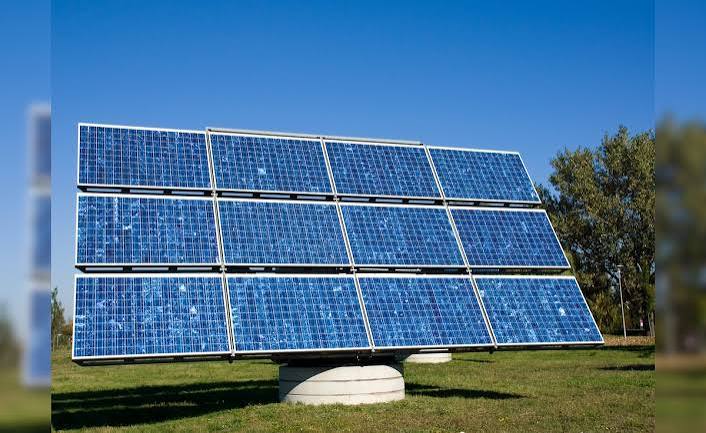
The economist outlined the main strategies for India to deal with the current shock, stating that reducing reliance on imported crude is essential, along with increasing renewable energy, developing strategic reserves, and boosting nuclear capability.
She also recommended that:
- Vulnerability to geopolitical chokepoints can be decreased by diversifying source and securing alternate trade routes.
- Food and input security can be increased by boosting fertiliser production and encouraging substitutes like green ammonia.
- Sustaining growth in a turbulent global climate will require easing corporate limitations, enhancing logistics, and investing in talents.
These structural priorities—energy security, supply chain resilience, and regulatory simplification—are highlighted in the Finance Ministry review as being crucial to managing upcoming shocks.
A resilience test under stress
India's economic architecture is being put to the test by the West Asia conflict, which is more than just another external shock. The economy is nevertheless vulnerable to financial, trade, and energy volatility. If the conflict continues, growth may stagnate, inflation may increase, and external balances may be strained.
However, the underlying narrative is one of relative power. India's stronger fundamentals, including robust demand, healthier balance sheets, and policy flexibility, provide a buffer, as both the Finance Ministry and the RBI emphasise.
While cautioning that risks are increasing as the conflict intensifies, Deshpande stated, "The profile of India's domestic strengths today is very different and much improved compared to past external shock periods, implying a stronger shock-absorptive capacity."
How well these buffers are employed and whether the crisis is utilised as a chance to hasten fundamental reform will determine the result.
The economist stated that "India must continue focusing on efficiency gains and reforms that improve investor sentiment and build resilience in a volatile global environment" in order to sustainably boost growth.

.jpg)
.jpg)
.jpg)