
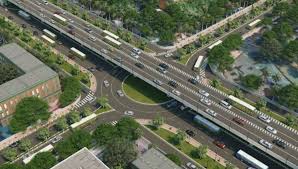
The Odisha government has started an ambitious infrastructure offensive, pledging to the construction of 37 new roads to alleviate persistent traffic congestion in Bhubaneswar.
With the budget already in place, the master plan proposes a variety of high-tech alternatives to modernise urban mobility, including an underground link and elevated highways.
Strategic Arteries and Key Connections
A key centrepiece of the project is a subterranean route connecting AG Square directly to the airport, which is expressly designed to bypass surface-level jams.
This is in addition to a 2.12-kilometer underpass proposed for AG Square and a 2.20-kilometer elevated corridor connecting Kalinga Studio Square and SUM Hospital.
Barang to Jatni: A lengthy 38.4-kilometer journey that follows the Daya West Canal.
Barang to Trishulia: A 6.49-kilometer connector between Dhakulei Peeth and the NH-16.
Inner Ring Road access: A 2.82-kilometer segment that connects the NH-16 to the city's center via AIIMS and Damodarpur.
Kaimatia to Barang-Pitapalli: a 7.61-kilometer project to improve transit.Rapid developments
In a remarkable reversal, a new 11-kilometer left parallel road network between Salia Sahi and Chunkoli will be completed in just 15 days. Meanwhile, commuters in the technological and education areas would be relieved by a 1.70-kilometer stretch from Patia Square to Infocity and a 2.10-kilometer road connecting KIIT to Sikharchandi.
Urban Grid Improvements
The comprehensive plan also specifies many intermediate segments targeted at smoothing the everyday commute:
Project Route and Distance
Acharya Vihar to Damana Square (via Kalinga Hospital): 6.18 kilometres
Laxmisagar to Museum Square (via Kalpana Flyover): 4.91 km.
Distances from Gohira to Gothapatna: 4.59 km and NH-16 to AIIMS Square (via Ghatikia): 3.38 km.
Khandagiri to Gandamunda: 2.23 km.
Distance from Daya Setu to Dhauli Square is 1.71 km.
DN Regalia to K-7: 1.39 km.
This multi-pronged strategy reflects a dramatic shift in the city's layout, focusing on high-capacity bypasses and innovative subsurface engineering to keep the capital a viable, modern hub.
.jpg)
.jpg)
.jpg)