
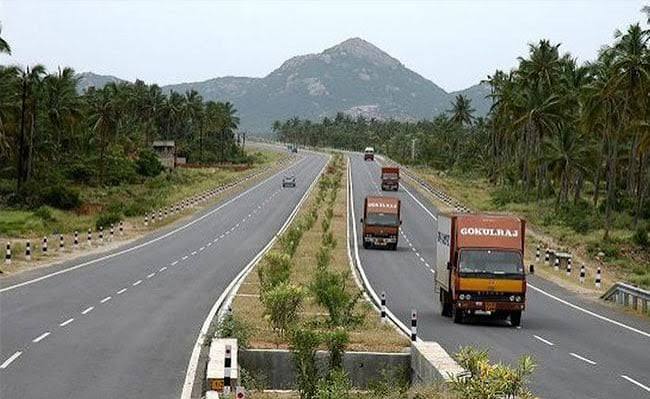
The administration informed Parliament that between 2023 and 2025, over 37,000 individuals died on 6,358 National Highway sections that were prone to accidents.
The "black corridors" are sections that total 6,409.7 kilometers in length. 37,164 deaths were reported on them during the course of the three years, according to the government.
In response to a query from Rajya Sabha MP Sagarika Ghose, the Union Road Transport and Highways Ministry released the data.
Artificial intelligence-based technologies and accident data from the Electronic Detailed Accident Report, or e-DAR, platform were used to identify the corridors in real time.
Continuous sections of National Highways that meet the criteria to be designated as accident black spots—locations with a certain number of fatalities and serious injuries—are known as "black corridors."
The Most Black Corridors Are in Tamil Nadu
Tamil Nadu has the most black corridors, at 958, according to government data presented in the Rajya Sabha.
With 671 such spans, Uttar Pradesh comes in second, followed by Karnataka with 607. Kerala and Andhra Pradesh have 386 and 384, respectively, while Maharashtra has 477.
With 70 black corridors, Villupuram in Tamil Nadu has the most of all the districts and police jurisdictions included in the government data.A different Rajya Sabha question received the district-by-district data.
The Plans of the Government
Road markings, warning signs, collision barriers, road studs, and delineators are among the immediate safety precautions on accident-prone areas, according to the government.
Closing unapproved median openings and installing traffic-calming steps are further methods.
Improving road geometry and intersections, expanding the carriageway at particular spots, and building underpasses or overpasses are examples of permanent work.
According to the government, this kind of work might be time-consuming because it might involve clearing forests, acquiring land, and moving utilities.
Additionally, National Highways are now required to conduct road-safety audits during the design, construction, pre-opening, operation, and maintenance phases.
According to the Center, regional offices of road-owning organizations have appointed Road Safety Officers to supervise audits and other safety-related tasks. In the meanwhile, the e-DAR platform serves as a central repository for managing, reporting, and analyzing data related to traffic accidents.
How Many Were Repaired? The Center Is Silent
In its response, the government outlined both immediate and long-term safety precautions, although it did not specify how many of the 6,358 black passageways had been completely repaired.
.jpg)
.jpg)
.jpg)
.jpg)
.jpg)
.jpg)