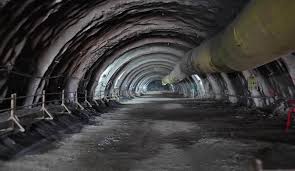
The successful completion of the third mountain tunnel (MT-07) in the Palghar district of Maharashtra marked another significant construction milestone for India's first high-speed rail network. The tunnel near Ambesari village in Dahanu Taluka is 417 meters long and 14.4 meters broad. It is intended to support the Mumbai-Ahmedabad Bullet Train corridor's up and down tracks.
Three mountain tunnels in Maharashtra were finished in just five months, demonstrating the project's quick progress. With the help of sophisticated safety and monitoring systems, MT-07 was excavated utilising controlled drilling and blasting from both ends. Seismographs, strain gauges, and 3D monitoring targets were among the real-time instruments used to guarantee worker safety and structure stability during the operation.
The most recent accomplishment comes after the completion of MT-06, a 454-meter tunnel in February, and MT-05, a 1.5-km tunnel close to Saphale in January 2026. Four of the seven mountain tunnels being constructed in Maharashtra have made significant progress thus far, while the remaining portions are in varying phases of development.
The project is moving quickly across a crucial section of the bullet train corridor, the industrial belt between Boisar, Maharashtra, and Vapi, Gujarat. According to officials, the deployment of cutting-edge monitoring systems and tunnelling technologies is speeding up construction while upholding strict safety regulations.
The Mumbai-Ahmedabad Bullet Train Project, which is anticipated to revolutionise high-speed rail travel in India and demonstrate the nation's expanding proficiency in large-scale infrastructure engineering, is gaining steam with the successful completion of another tunnel.
.jpg)
.jpg)
.jpg)
.jpg)
.jpg)